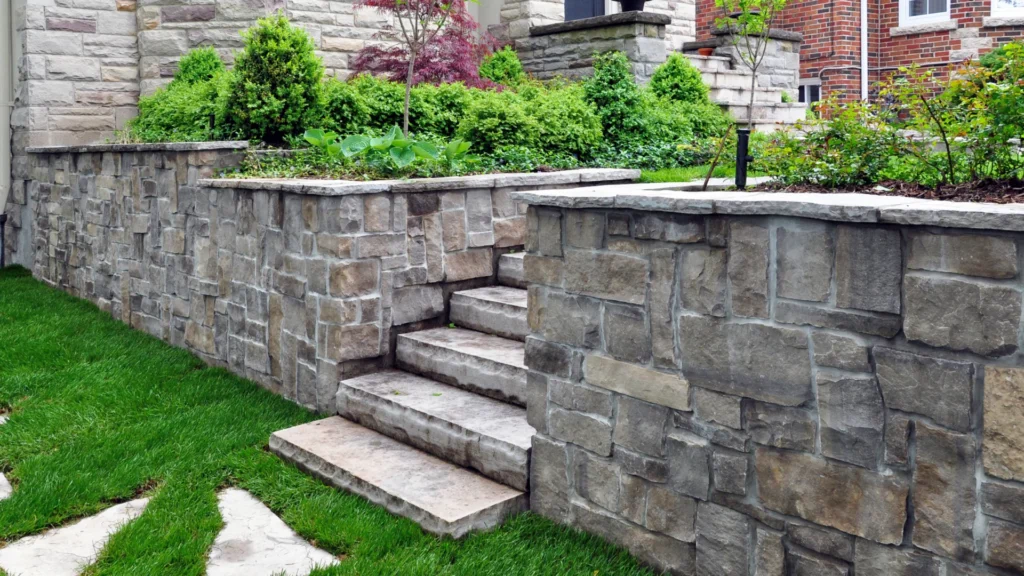
Retaining walls are a necessity for many Utah County homes, particularly those situated along the challenging slopes of the Wasatch Front. When facing the area’s unique geological hurdles, choosing the right material for slope stabilization is critical to protecting your property’s foundation and landscape.
This decision comes down to two main contenders: boulder walls and concrete blocks. Each option presents advantages and disadvantages in terms of cost, aesthetics, and durability against Utah’s weather and freeze-thaw cycles. Understanding how each material interacts with local terrain is the first step toward a successful, long-lasting solution.
In this blog, we’ll compare boulder walls and concrete blocks to help you ensure you make the best decision for your Utah County home.
Understanding the Soil and Slope Challenges in Utah County
Due to its location on the Wasatch Front, homes in Utah County can face some significant soil and slope challenges. The most significant challenge these homeowners face is expansive and collapsible soils. This soil can lead to cracked foundations and damaged infrastructure, which can make it difficult to build on if you don’t have proper training and experience.
The geology of the area, which is a direct result of ancient Lake Bonneville deposits and tectonic activity, creates a complex and sometimes unstable substrate. Expansive clay soils swell dramatically when wet and shrink when dry, exerting immense pressure on retaining walls and foundations.
Conversely, loose, collapsible soils, often found on the bench areas, can suddenly lose volume when saturated, leading to settlement and instability. Additionally, the steep slopes prevalent from Mapleton to Spanish Fork exacerbate drainage and erosion issues. When coupled with the intense seasonal weather, the risk of soil migration and structural failure increases significantly.
Managing this complex terrain requires more than standard construction practices; it demands specialized knowledge of local geotechnical conditions and often necessitates engineered solutions like robust retaining walls with excellent drainage and deep, stable footings to ensure long-term stability and protection for the home.
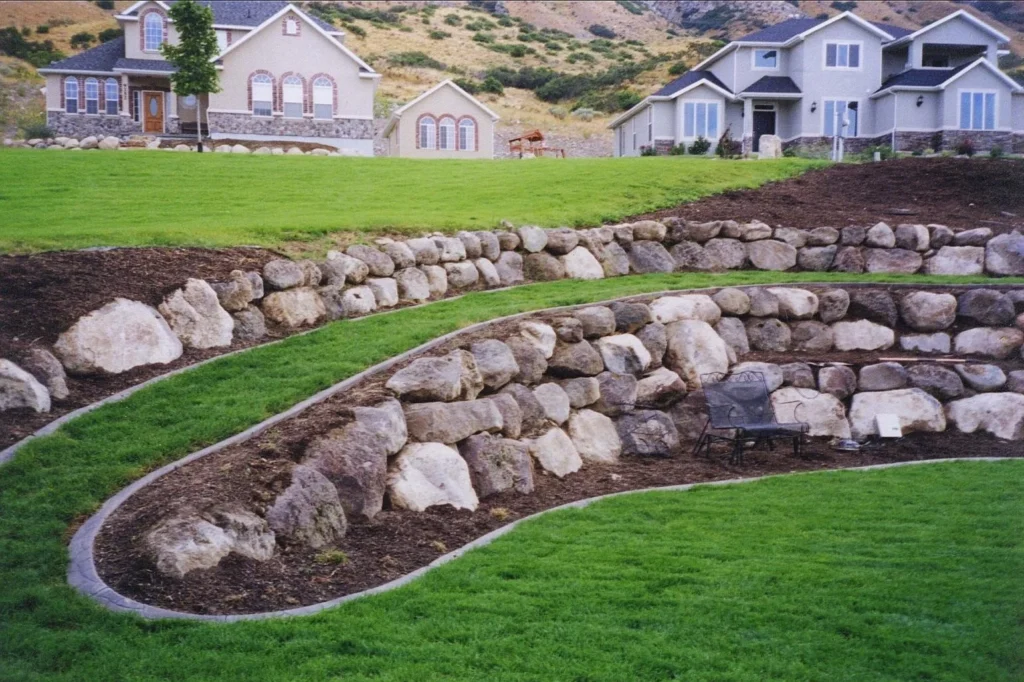
Boulder Walls vs. Concrete Blocks: A Comprehensive Comparison
When you’re dealing with such complex soil and terrain challenges, it is important that you choose an appropriate material for retaining walls. But, before you invest in a retaining wall, it is important to understand the major comparisons between boulder walls and concrete blocks. Some features you should consider about these options include the following:
| Feature | Natural Boulder Walls (Limestone, Granite) | Manufactured Concrete Blocks |
| Initial Cost | Moderate to high – depends on size and sourcing | Moderate – generally consistent pricing |
| Installation Difficulty | Labor-intensive; requires heavy equipment and skilled placement | Easier to stack; often DIY-friendly with proper base |
| Longevity | 50+ years with minimal maintenance; highly durable in freeze-thaw cycles | 30–50 years; susceptible to cracking if drainage is poor |
| Maintenance | Low – mostly occasional cleaning or repositioning | Moderate – may need repointing, sealing, or crack repair |
| Aesthetic Appeal | Natural, unique, blends with landscape | Uniform, clean lines; less natural appearance |
| Environmental Impact | Low – natural material, minimal processing | Higher – manufacturing and transport require energy |
| Adaptability to Slopes | Excellent – can accommodate uneven terrain and frost movement | Good – but may need engineered reinforcement on steep slopes |
If you’re still on the fence about whether boulder walls or concrete blocks are right for your home, it’s best to reach out to a Utah County landscaping team. They will understand how your terrain, budget, needs, and aesthetic desires will impact which is right for your home.
Why Utah County Requires Permitting for Retaining Walls
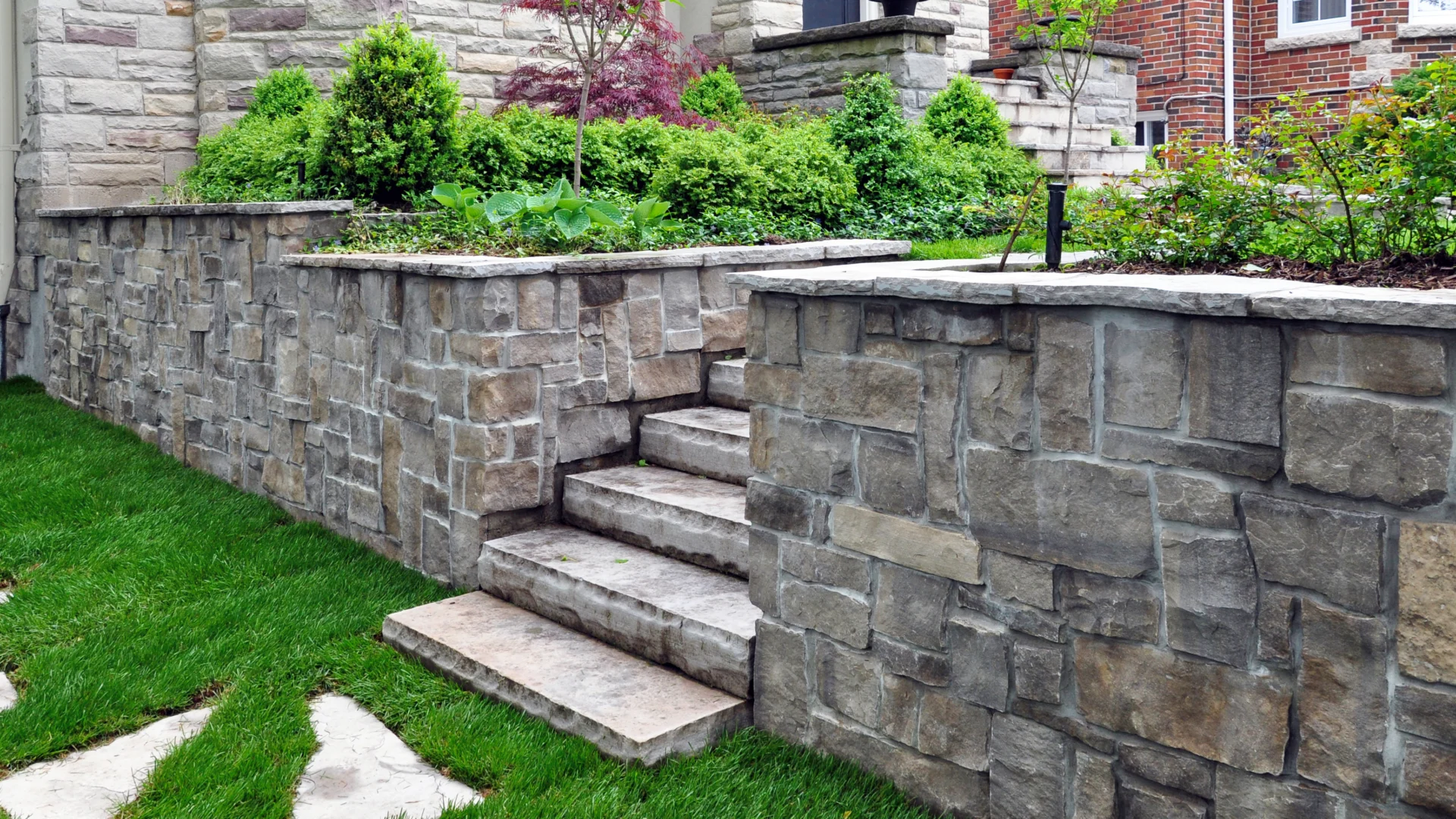
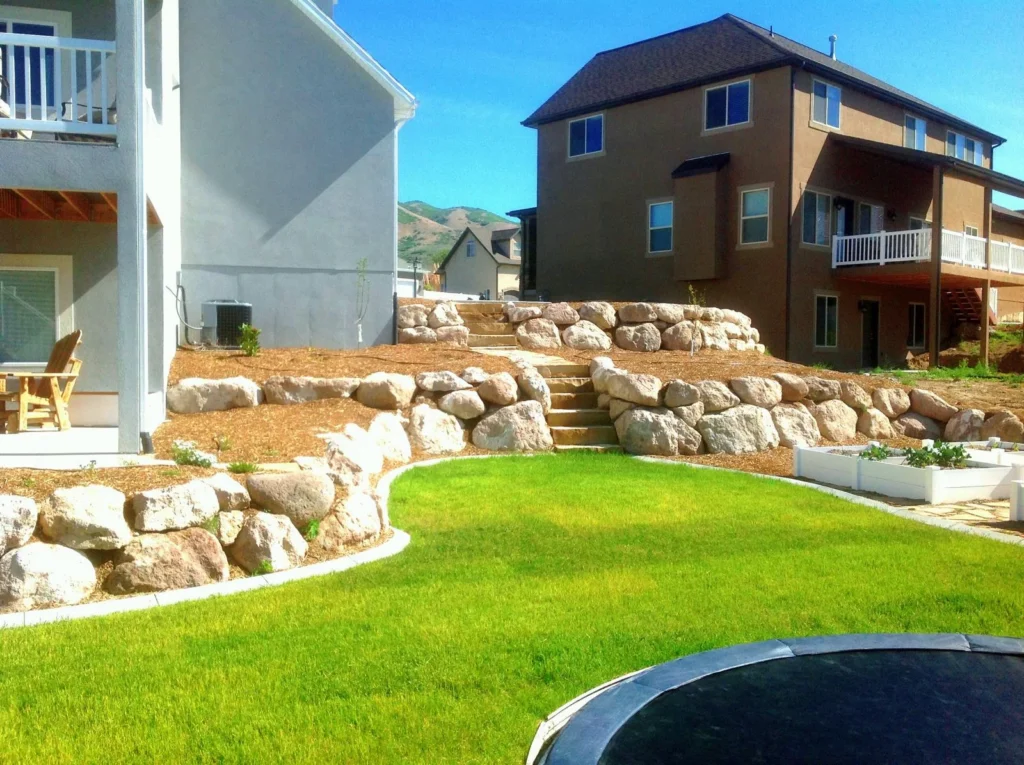
While you might want to invest in a retaining wall to help protect the terrain of your Utah County yard, it is important that you consider permitting requirements. When you live in Mapleton and Spanish Fork, you are allowed to build a retaining wall made of natural stones, but, if the wall is taller than 4 feet tall, you are required to get a building permit and engineered plans.
This rule is especially relevant on steep hillside lots where soil pressure and drainage challenges increase structural risk. These permits are essential for ensuring your retaining wall has proper backfill, drainage systems, and reinforcement so it will not shift or fail through Utah’s continually changing weather conditions.
The freeze-thaw cycle also complicates installation. Boulder walls flex as soil expands and contracts, making them more forgiving; concrete blocks depend heavily on engineered drainage and footing design to prevent cracking or movement caused by soil swelling. Ultimately, permits and engineering protect your property by ensuring code-compliant slope stabilization.
Which is Best for Your Utah County Terrain and Home?
When it comes to choosing the best retaining wall for your home, boulder walls are the best option in the long-term. These materials are more well-equipped to handle Utah’s harsh winter weather conditions, and are a great choice for homeowners who have dealt with previous flooding and water pooling problems in their yards.
If you are looking for a more forgiving, reliable choice, don’t settle for the subpar results provided by a concrete block wall. Instead, trust that boulder walls are ready to take on whatever snowmelt and rainfall comes their way. Whether you live on the bench in Spanish Fork or want to avoid the risks that come with concrete materials, natural stone is the way to go.
Call Total Yard Pro for Boulder Wall Installation Today
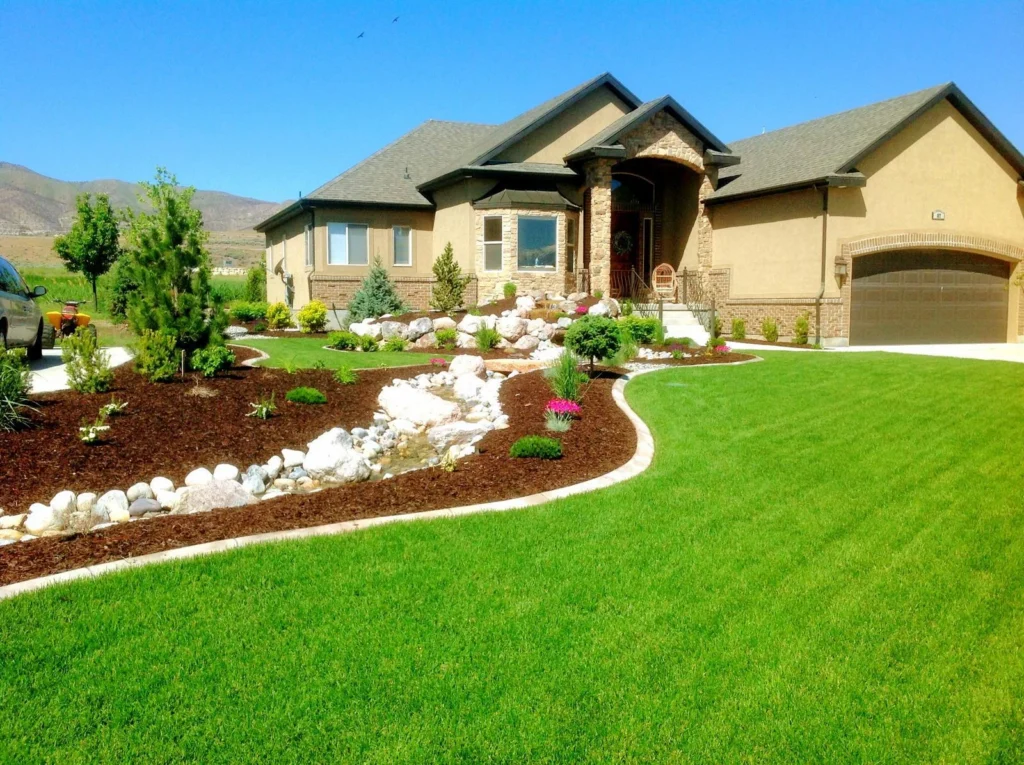
When you’re investing in boulder walls for your yard, you want to ensure you’re working with a reliable landscaping team for this project. If you’re looking for a landscaping team in the Mapleton area who can help you design the perfect boulder wall, turn to our team at Total Yard Pro for support. We will ensure your wall looks beautiful and that you don’t have to worry about erosion, flooding, or drainage problems down the road.
If you would like to speak to a member of our team about designing boulder walls for your yard, don’t hesitate to contact us today.